
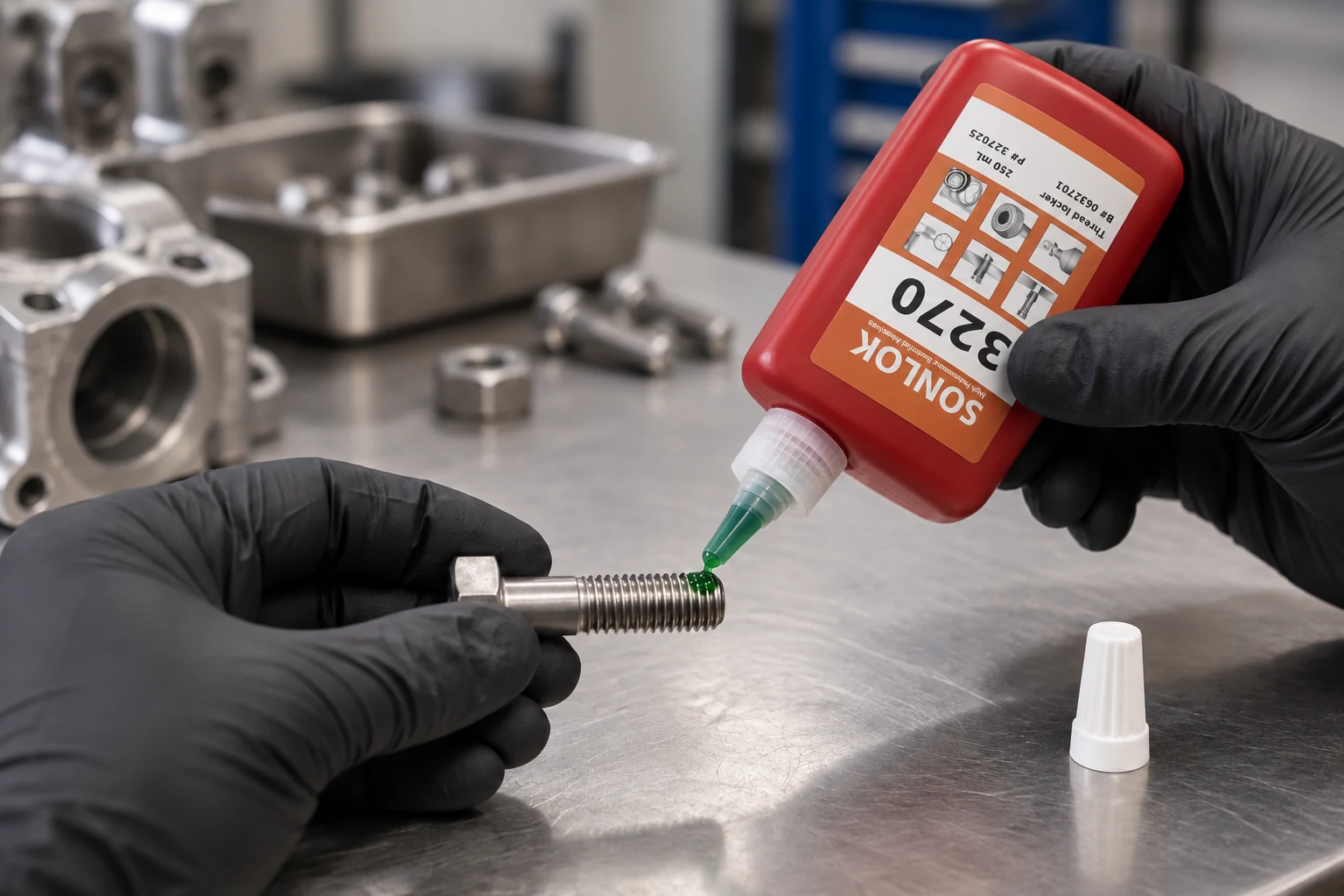
Define both surfaces
Record the exact materials, coatings and surface condition on each side of the joint. “Plastic” is not specific enough: polymer type, mould-release residue and surface treatment can change the result.
Describe the joint
Identify the bond area, clearance, thickness and loading. A thread, a cylindrical fit and a wide panel joint need different adhesive behaviour. Consider peel and cleavage loads as well as shear.
Map the service environment
Document temperature, moisture, chemicals, vibration and the duration of exposure. Use the current technical data sheet to screen candidates, then validate the bonded assembly under relevant conditions.
Fit the production process
Separate working time, fixture time and full cure. Check dispensing access, mixing requirements, light access where relevant, and the time available before the next operation.
Validate before release
Test actual substrates and the intended preparation, dispense and cure process. Define acceptance criteria and record the results before scaling the process.
TAKE IT INTO YOUR PROCESS
Bring the materials, joint geometry, process timing and service conditions to the selection discussion.
Build an application briefGeneral application guidance. Follow the current grade-specific technical and safety data sheets, and validate the finished assembly.